
A miniature living room is the heart of any dollhouse — the place where your tiny characters gather, read and relax. In this three-part series we build a complete living room from scratch. This first part covers the basics: preparing the room box, adding wallpaper, laying a beautiful popsicle stick floor and placing the first furniture pieces.
Step by Step
Step 1 — Prepare the Room Box
Start with a sturdy cardboard box or an open-fronted room shape. Make sure the inside walls are clean and smooth. If you are working with corrugated cardboard, you can glue a layer of thin white paper over the walls first — this gives you a much nicer surface for wallpaper and paint. Trim any rough edges with scissors or a craft knife.
Step 2 — Apply the Wallpaper
Choose a wallpaper pattern that suits a cosy living room — small floral prints, stripes or warm colours all work beautifully. Measure each wall carefully and cut your paper to fit. Apply a thin, even layer of glue to the wall and press the paper into place, smoothing out any air bubbles with your fingers. Work one wall at a time and let each one dry before moving on to the next.
Step 3 — Lay the Popsicle Stick Floor
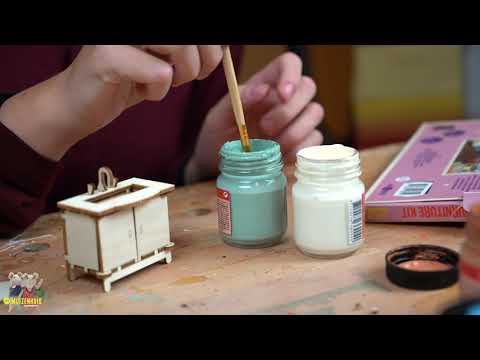
Popsicle sticks make wonderful miniature floorboards. You can use them whole or cut them to length depending on the size of your room. Stain or paint them first in a warm wood tone — brown, honey or even a grey wash for a more rustic look. Once dry, glue them side by side across the floor of the room, pressing each one firmly into place. Stagger the ends slightly for a realistic plank effect.
Step 4 — Position Your First Furniture Pieces
Now the room is starting to feel like a real space. Place your first large furniture pieces — a sofa, an armchair or a bookshelf. Do not glue anything down yet. Move things around and try different arrangements until the room feels balanced. Think about where a tiny mouse would actually sit and what they would look at. Once you are happy with the layout, you can gently glue the larger pieces in place.






Comments
Be the first to comment!